

Practical advice on travelling with your dog around Ireland and abroad, from the team at Primrose Hill Veterinary Hospital in Sallynoggin.
Holidays are meant to be relaxing, and for many people that includes bringing the dog along. Whether you are planning a staycation in Ireland or travelling overseas, a little preparation makes all the difference. Travelling can be exciting for dogs, but it can also be tiring and stressful if their needs are not considered.
This guide covers what dog owners should know before travelling in Ireland or abroad, and how the team at Primrose Hill Veterinary Hospital can help you plan with confidence.
Taking your dog on holiday in Ireland
Ireland is full of dog friendly destinations, from countryside cottages to coastal breaks. Locally we hear good things about Dún Laoghaire. Even so, it is worth planning ahead.
Choosing dog friendly accommodation
Not all places that say dog friendly are the same.
- Check whether dogs are allowed in all areas or just certain rooms
- Ask about enclosed gardens for safe off lead time
- Check if there are extra charges or rules
Make sure the accommodation suits your dog, not just allows them.
Travel safety
How your dog travels matters for their safety and comfort.
- Use a suitable harness, crate or dog guard in the car
- Never allow dogs to travel loose
- Plan regular breaks for water and toilet stops
- Never leave your dog alone in a parked car
If your dog suffers from travel anxiety, the team at Primrose Hill Veterinary Hospital can offer advice and calming support.
Exploring safely
New environments are exciting but can carry risks.
- Keep your dog on a lead near livestock
- Be aware of seasonal hazards such as blue green algae in lakes and slow moving water
- Check beach rules as dog access can vary by time of year
- Watch for signs of overexertion, especially in warm weather
Your dog may need more rest than usual during busy holiday days.
Taking your dog abroad
Travelling abroad with a dog takes more planning, but it can be very rewarding.
Understanding the rules
Every country has its own pet travel requirements, and these need to be in place well before you travel.
- Dogs must be microchipped
- A valid rabies vaccination is essential, and must be given at least 21 days before travel
- Routine vaccinations and flea and worm treatment should be up to date and recorded
- A tapeworm treatment is required before entering certain countries
Rules can change, so always check current requirements with the relevant authorities well in advance. At Primrose Hill Veterinary Hospital, our vets can help you get the right paperwork and treatments in order, and to do this we will need a valid form of ID, proof of address, and your pet must be microchipped. Most airlines and ferries also require a veterinary health check within a week of travel, so please contact us in good time before your trip.
Health considerations
Different countries bring different health risks.
- Ticks and parasites may be more common
- Certain diseases are not seen in Ireland
- Climate changes can affect dogs, especially brachycephalic breeds
Your vet at Primrose Hill Veterinary Hospital can advise on parasite protection, vaccinations, and whether your dog is suited to travel.
A specific note on travel to southern Europe
If you are heading to the Mediterranean, please ask your vet about Leishmaniasis before you go. Countries where it is most relevant include Spain, Portugal, France, Italy, Greece, Cyprus and Malta.
Leishmaniasis is a serious and potentially life changing disease that can affect dogs for life. It is spread by sandflies, which are most active around dusk and dawn in warmer months. There is no widely available vaccine here, but your vet can recommend Leishmaniasis prevention measures such as repellent collars and topical treatments before you travel.
Other regional risks worth raising with your vet at the same time include Ehrlichia, Babesia and Heartworm. Cover varies by country and by season.
Ideally, book a pre-travel consultation around four to six weeks before you go. That gives time for any preventative treatments to take full effect, and for the rabies vaccination and any paperwork to be sorted without a last-minute rush.
Travel and accommodation abroad
Long journeys can be tiring for dogs.
- Check airline or ferry pet policies carefully
- Make sure accommodation truly welcomes dogs
- Plan a calm first day to allow your dog to settle
Some dogs love travelling abroad, while others cope better staying closer to home.
Packing essentials for your dog
A well packed dog bag helps everything run smoothly.
- Food and treats your dog is used to
- Bowls for food and water
- Lead, harness and spare collar
- Bedding or blanket with familiar smells
- Any medication with clear instructions
- Pet insurance details and vet contact numbers
Keeping routines as normal as possible helps dogs feel secure.
How your vet can help
Your vet plays a key role in holiday planning, especially for travel abroad. The team at Primrose Hill Veterinary Hospital can help with:
- Travel health checks to confirm your dog is fit to travel
- Vaccinations and parasite prevention
- Help with the paperwork and treatments needed for travel
- Advice on travel anxiety and motion sickness
- Guidance on managing existing health conditions while away
Speaking to your vet early gives you time to prepare properly and avoid last minute stress.
A holiday everyone enjoys
Holidays with your dog can be incredibly rewarding, whether you are exploring Ireland or heading overseas. The key is realistic planning, understanding your dog's limits, and getting the right advice. If you are thinking about travelling, book a chat with Primrose Hill Veterinary Hospital before you go via our online booking page or call (01) 280 3303.
Quick answers
How long before travel should I prepare to take my dog abroad?
Start early. The rabies vaccination must be given at least 21 days before you travel, and most airlines and ferries require a veterinary health check within a week of departure. We recommend booking a pre-travel consultation around four to six weeks ahead so everything is in order without a last-minute rush.
What does my dog need before travelling abroad?
As a minimum, your dog must be microchipped and have a valid rabies vaccination given at least 21 days before travel, with routine vaccinations and flea and worm treatment up to date. Some countries also require a tapeworm treatment. Requirements vary by destination, so always check current rules with the relevant authorities and speak to your vet well in advance.
What is Leishmaniasis and which countries is it a risk in?
Leishmaniasis is a serious disease spread by sandflies in warmer climates. It is most relevant for travel to Spain, Portugal, France, Italy, Greece, Cyprus and Malta. Prevention is via repellent collars and topical treatments — speak to your vet 4 to 6 weeks before travel.
Can my brachycephalic dog (e.g. French Bulldog, Pug) fly?
Many airlines restrict or refuse short-nosed breeds because of the risk of breathing problems at altitude. Check with the airline well in advance and discuss with your vet whether flying is suitable for your specific dog.
How to book and contact us
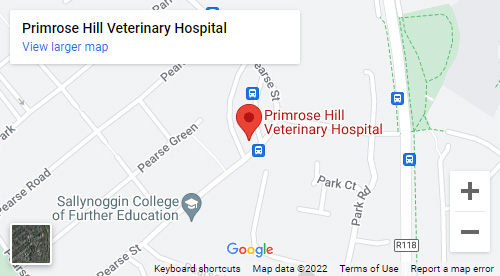
To book online or check availability, visit our online booking page. You can also call us on (01) 280 3303, or pop into Primrose Hill Veterinary Hospital during our opening hours: Monday to Friday 8.00am to 7.00pm and Saturday 8.00am to 12.00pm (closed Sundays and bank holidays). For out-of-hours emergencies please see our emergency information.

Follow Us: